How Do Automatic Gate Openers Work? (Explained Simply)
October 21, 2026
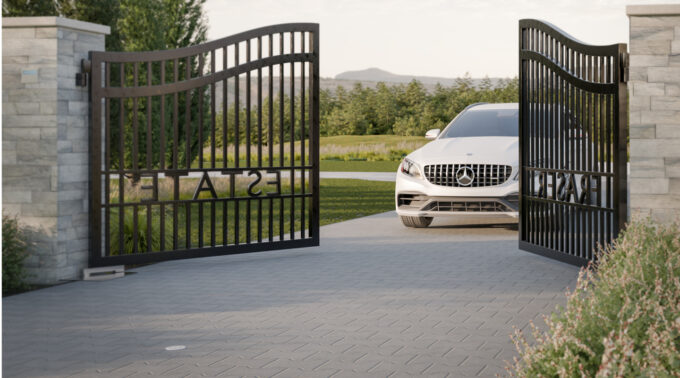
Press a button and your gate opens, seems simple enough, but what’s actually making it move?
Whether it’s a sliding gate at home, a swing gate at a business entrance or a boom gate controlling vehicle access, the basic principle is much the same.
A control device sends a command, the motor moves the gate and a control system manages how it operates.
Of course, there’s a little more happening behind the scenes. Here’s how it all works.
What makes an automatic gate work?
At its simplest, gate automation takes the physical effort out of opening and closing a gate.
Instead of getting out of your vehicle to move the gate by hand, an electric motor does the work for you.
But a motor on its own isn’t enough. Several components need to work together to operate the gate safely and reliably.
The gate motor
The motor does the physical work of moving the gate. Depending on the application, it might drive a sliding gate along a track, move a swing gate through its opening arc or raise and lower a boom.
Not all gate motors are designed to do the same job, though.
Take the Cardin SLX624, for example. Designed for sliding gates up to 600kg, it uses a 24V DC motor and encoder-controlled positioning to manage gate movement. Features such as soft start and stop help provide smoother operation while reducing mechanical stress.
At the other end of the scale, Downee’s Australian-made DA700 is designed for demanding industrial applications, operating sliding gates up to 2,000kg at speeds of up to 700mm/s.
Both automate a sliding gate, but they’re built for very different working environments.
The control board
Think of the control board as the system’s decision-maker.
It receives commands, manages the motor’s operation and responds to information from connected devices.
Depending on the automation system, it can also manage features such as opening and closing speeds, automatic closing times and obstacle detection.
Remotes and access controls
These are the devices you use to tell the gate what to do.
A handheld remote is the most familiar example, but automated gates can also be operated using keypads, key switches, vehicle detection systems and compatible smartphone apps.
Modern automation can offer more than simple open and close commands.
For example, selected Cardin sliding gate operators feature built-in Bluetooth connectivity, allowing installers to configure and manage compatible systems through the free CRD TWO app. Optional Wi-Fi connectivity can provide additional remote management capabilities.
It’s a good example of how gate automation has evolved, making systems easier to configure, manage and maintain.
Safety devices
Automated gates are moving pieces of machinery, so safety is an important part of the system.
Photoelectric beams, safety edges and other protective devices can help detect obstructions or contact, allowing a correctly configured control system to respond according to its safety design.
The equipment needed depends on the gate, its operating environment and the risks associated with its use.
Power supply
Most automated gates operate using a mains electricity supply, although solar-powered systems are also available.
Some automation systems can accommodate battery backup, allowing continued operation for a period during a power failure.
The power arrangement needs to suit the motor, the site and how frequently the gate will be used.
What happens when you press your gate remote?
Let’s use a sliding driveway gate as an example.
Step 1: You press the remote
Your remote sends a wireless signal to a compatible receiver connected to the gate’s control system.
Step 2: The control board receives the command
The control board processes the signal and, if the required operating conditions are met, instructs the motor to open the gate.
Step 3: The motor starts moving
On a typical tracked sliding gate, the motor turns a drive gear that engages with a toothed rack attached to the gate.
As the gear turns, the gate moves along its track.
Step 4: The system monitors operation
Depending on the equipment installed, the control system monitors position, movement and connected safety devices while the gate operates.
If an obstruction or other fault is detected, the system may stop or reverse movement, depending on its design and configuration.
Step 5: The gate reaches its open position
The motor stops when the gate reaches its programmed or detected opening position.
If automatic closing has been configured, the gate can close again after a set period, provided the necessary operating and safety conditions are satisfied.
That’s the basic process. A command is sent, the control system responds, and the motor moves the gate.
The same principle applies to other types of automation, even though the way the gate physically moves can be quite different.
Do sliding, swing and boom gates work differently?
Yes. While the electronics share similar principles, the mechanical operation depends on the gate.
Sliding gate automation
Sliding gates move sideways across an entrance rather than swinging inward or outward.
On a typical tracked system, the motor drives a gear that engages with a rack attached to the gate. The gate is supported by wheels running along a ground track.
Cantilever sliding gates work a little differently. The gate is supported by a roller system and moves across the opening without needing a ground track through the driveway.
This can be particularly useful at entrances where a ground track would be difficult to maintain or unsuitable for the site.
Downee offers both sliding gate automation and the supporting hardware, including wheels, tracks, racks and cantilever systems.
From residential operators such as the Cardin SLX range through to our Downee DA industrial automation, the right combination depends on gate weight, dimensions, usage and site conditions.
A motor might provide the movement, but it’s the complete system that determines how well the gate performs.
Swing gate automation
Swing gates open on hinges, much like a door.
An automated swing gate uses an operator to push or pull the gate leaf through its opening arc.
Different designs are available, including articulated arm, linear and underground operators.
For example, Downee’s DEA GEKO/X articulated arm range provides automation for suitable swing gate applications, while our DA6000 industrial swing gate operator is designed for more demanding environments.
The key consideration is having enough clear space for the gate to open, along with suitable hinges, posts and supporting hardware.
A correctly matched operator and gate hardware combination is particularly important for heavier gates and frequently used entrances.
Boom gate automation
Boom gates are designed primarily to control vehicle access.
Rather than moving an entire gate, a motor raises and lowers a barrier arm to allow vehicles through.
You’ll commonly see them at car parks, warehouses, commercial properties and controlled vehicle entrances.
The DEA STOP boom gate, available through Downee, is an example of an automated barrier system designed for vehicle access applications, with configurations to suit different entrance requirements.
Depending on the site, boom gates can be connected to access control equipment, vehicle detection systems and other devices to manage traffic flow.
For example, a vehicle detection loop can be used to trigger an exit command, reducing the need for drivers to operate a separate remote.
What about solar power and power outages?
Not every gate has easy access to mains electricity.
For rural properties, farms and remote entrances, getting power to the gate can be one of the biggest challenges of an automation project.
That’s where solar gate automation can make a difference.
A solar system uses panels to generate electricity, with energy stored in batteries to power the gate when required.
The important part is making sure the system is correctly sized for the motor, expected gate usage, available sunlight and site conditions.
Can an existing gate motor run on solar?
Potentially, yes.
While some automation systems are designed specifically for solar applications, other operators can operate using a correctly specified solar power solution.
Downee’s UniSolar has been developed to simplify this process.
Rather than needing a different solar solution for each automation brand, UniSolar provides a universal solar platform designed for compatible 24V gate automation systems across the Downee range.
That gives installers greater flexibility when selecting automation for rural or off-grid applications, without being limited to one motor brand’s solar accessories.
System compatibility, power consumption and battery capacity still need to be considered for each installation.
What happens if the power goes out?
That depends on the automation system and the equipment installed.
Some motors support battery backup, which can keep the gate operating during a temporary power outage.
Many systems also have a manual release mechanism that allows the motor to be disengaged so the gate can be moved manually.
It’s worth knowing how your particular system operates before you need to use it.
How do automatic gates detect obstacles?
A gate that opens and closes automatically needs more than a motor and a remote.
It also needs safety measures appropriate to the installation.
One common device is a photoelectric safety beam.
These typically work using a transmitter and receiver positioned across an area of the entrance. If something interrupts the beam, the control system receives a signal and responds according to its configuration.
Other systems may use motor force monitoring, encoders, safety edges or additional protective devices.
For example, Cardin’s SLX automation range incorporates encoder-based movement control and safety-related functions to help manage gate operation.
These features can help reduce the risk of injury or damage, but no single device makes every gate installation automatically safe.
The location of the gate, its movement, surrounding structures and the way people or vehicles interact with it all influence the safety requirements.
That’s why correct system design, installation, commissioning and ongoing maintenance are important.
Choosing the right automation for your gate
Understanding how an automatic gate works is useful. Choosing the right motor and supporting hardware is where the details really matter.
A lightweight residential gate opening a few times a day is a very different application from a heavy industrial gate operating throughout a busy workday.
Before selecting an operator, there are a few important things to consider.
Gate weight and size
Every operator has limits on the gate weight and dimensions it can accommodate.
But the motor is only part of the equation.
A sliding gate also needs suitable wheels, track or cantilever hardware, while a swing gate relies on appropriate hinges, posts and supporting structures.
These components all need to be matched to the gate and its intended use.
How often the gate operates
An automated gate at a family home may only cycle a handful of times each day. A busy commercial entrance could operate many times an hour.
This is where duty cycle becomes important.
Duty cycle describes the amount of time an operator is designed to run within a given operating period. Choosing a motor with a suitable duty cycle helps ensure it’s matched to the demands of the installation.
The installation environment
Driveway layout, ground conditions, available space, wind exposure and power availability can all influence the type of automation required.
For example, a cantilever sliding gate might be better suited to an entrance where a ground track would create ongoing maintenance challenges.
Similarly, a rural entrance without mains power may benefit from a solar solution, provided the motor and power system are correctly specified.
Access and safety requirements
Think about who will use the gate and how they’ll access it.
A residential installation might only need a few handheld remotes, while a shared entrance or commercial site could benefit from keypads, remote management or vehicle detection.
Safety equipment also needs to be selected and positioned according to the risks associated with the installation.
The motor is only part of the solution
Choosing a gate motor is important, but it’s only one part of creating a reliable automated entrance.
The gate hardware, control system, power supply and safety devices all need to work together.
What suits a residential driveway won’t necessarily be right for a busy warehouse entrance, and the most powerful motor isn’t always the best choice.
That’s why Downee’s range extends beyond gate automation.
From Australian-made industrial operators and premium Italian automation to sliding and swing gate hardware, cantilever systems, safety devices and access controls, we work with installers and gate manufacturers to help bring the complete solution together.
It’s about more than getting a gate to open and close. It’s about choosing components that suit the application and work reliably together over time.
Frequently asked questions
Can any gate be automated?
Many existing gates can be automated, but not every gate is suitable without modification.
The gate needs to be structurally sound, move freely and have suitable supporting hardware. The available space, power supply and installation conditions also need to be assessed.
Are automatic gates safe for children and pets?
An automated gate is moving machinery and can present risks, particularly around moving edges, hinges and trapping points.
Correctly specified safety devices, professional installation and regular maintenance help manage these risks. Children should not play around operating gates, and an automatic gate should never be treated as a substitute for supervision.
Do automatic gates need maintenance?
Yes. Like any mechanical system, an automated gate benefits from regular inspection and maintenance.
This may include checking tracks, wheels, hinges, safety devices, mounting hardware and the operation of the motor.
Maintenance requirements depend on the installation, usage and operating environment.
Can I add smartphone control to an automatic gate?
Many modern automation systems offer smartphone connectivity, either as a built-in feature or through additional compatible equipment.
For example, selected Cardin operators can be managed through the CRD TWO app using supported Bluetooth or Wi-Fi connectivity.
Other access management solutions, such as Downee’s i-Gate Plus, can provide mobile-network-based access control for compatible systems.
The options available depend on your existing motor, control board and communication equipment.
Making gate automation simple
There’s a fair bit of technology behind an automatic gate, but the basic idea is straightforward. The right motor, control system, hardware and safety devices work together to move the gate when you need it.
The real difference comes from choosing components that suit the gate and the job it’s being asked to do.
With automation and hardware solutions for everything from residential driveways to demanding industrial entrances, Downee helps trade professionals find the right combination of products for their projects.
Whether you’re planning a new installation or upgrading an existing gate, we’re here to help make the complex simple.
